
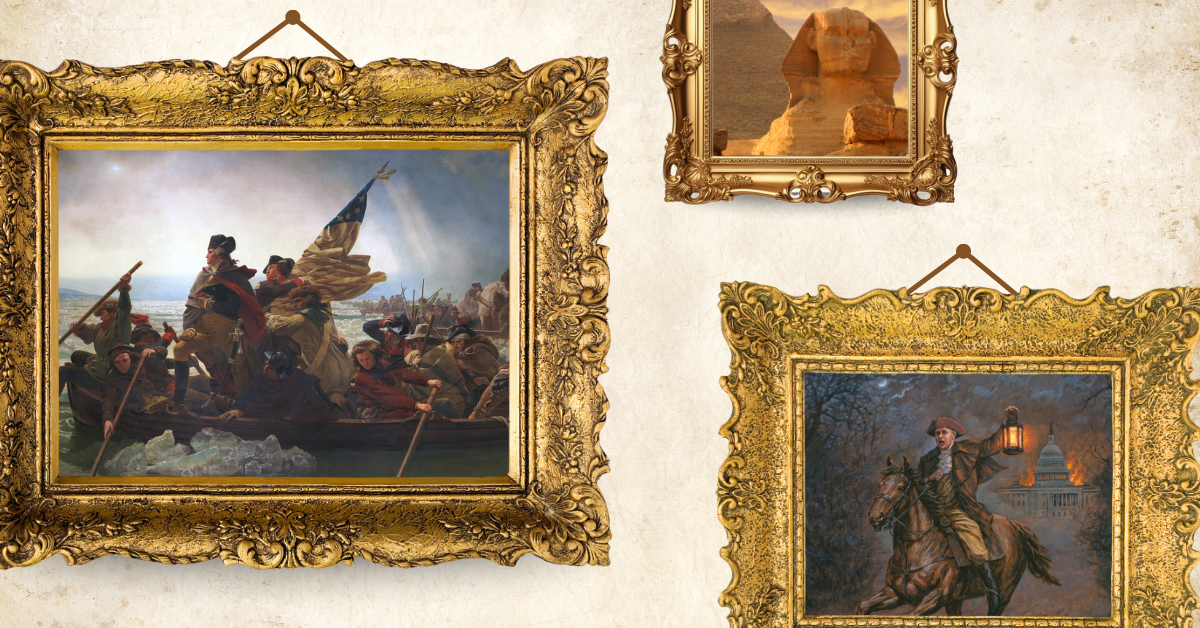
Dentistry is one of the oldest medical professions, with roots tracing all the way back to 7000 B.C. While we’re fortunate to practice with modern technology and advanced techniques today, sharing the fascinating history of dentistry can be a great way to engage and educate patients. From the Ancient Greeks using pliers for extractions, to the Chinese wrapping teeth in prayer-covered parchment, to the Romans’ unusual whitening rinse made from urine, these stories spark curiosity and open conversations about how far dental care has come, and why modern methods matter.
Tooth worms
The idea of "tooth worms" as the cause of tooth decay and pain is a historical myth that persisted for thousands of years. For centuries, cavities were genuinely thought to be caused by tiny, microscopic worms burrowing into teeth. Ancient civilizations in Greece, Egypt, India and China all were on board with the tooth worm diagnosis. It is suspected that ancient people may have mistaken tooth nerves for these arthropods or been caught off-guard by the worm-like shape of teeth roots.
Treatments ranged from luring out these mystical worms with honey, using fumigation techniques to smoke out the creatures, putting magic spells or incantations on the affected teeth and finally, just pulling them clean out! Does your patient not enjoy a trip to the dentist? Remind them how lucky they are to not have to sit through spell book readings during their annual visits.
Barber dentists
Did you know that during the Middle Ages, if you had a toothache, you would not pay a visit to a dental office, but to your barber instead? During these days, dentistry was not a separate field, and there were no specialized dentists like we have today. Barbers were already trained with sharp instruments and had strong hand-eye coordination that made them suitable for performing certain dental procedures. They would perform duties such as dental extractions, tooth fillings and the creation of false teeth for patients. Barbers learned how to perform these dental procedures through apprenticeships, and then passed down their knowledge within the community.
The last recorded barber-surgeon passed away in the 1820s. The first dental school, The Baltimore College of Dental Surgery, later opened in the 1840s. This historical context displays the significant role barbers have played in providing essential care throughout history, paving the way for some of the specialized professions we now heavily rely on today.
Washington’s famous dentures
Even the first President of the United States himself suffered the consequences of poor oral hygiene. George Washington is famously known for his set of wooden teeth, but what if we told you this was a total rumor! When Washington was inaugurated a President in 1789, only one real tooth remained in his mouth. It was Dr. John Greenwood, former soldier in the Revolution, and a true pioneer in American dentistry, that built a technologically advanced set of dentures for the new President. These dentures were a combination of human teeth, hippopotamus tusk, elephant ivory, gold and brass screws. It was decided to leave a hole in the dentures to fit around Washington's single remaining tooth, as Greenwood believed a dentist should "never extract a tooth when there is a possibility of saving it.” Unlike today’s denture’s, this set cause extreme pain and discomfort for Washington. They caused difficulty when eating or speaking and were easily stained due to it's material compensation.
If you ever want to see this phenomenon with your own eyes, the New York Academy of Medicine is the owner of a decorative case holding Washington’s very last real tooth. The only full set of the first President’s dentures that still survives today are preserved by George Washington's Mount Vernon. It has been noted that they were found to have contained lead, and therefore posed a huge health risk.
The dentists are coming!
Staying on the early American theme, everyone knows that Paul Revere is most famous for his iconic midnight ride warning colonial troops of the British’s advancement. But before this heroic story took place, there was a time when Revere was financially struggling, and with a family to support, decided to give a go at practicing dentistry (simple right?). He learned everything he knew about dental from his friend John Baker, a surgeon dentist at the time. Paul Revere had skills ranging from teeth cleaning to wiring in false teeth made from animal teeth or ivory.
One of Revere’s most well-known patients was his close friend Dr. Joseph Warren. Warren was the man who informed Revere the British were probably coming to capture Sam Adams and John Hancock, sending him off on his famous jaunt. Warren later died during the Battle of Bunker Hill, where he was buried in a mass grave without his uniform or identification. A few days after the British left, some friends went to the battlefield to find Warren’s body. Revere is who was able to identify Warren, by recognizing a specific walrus tooth he had placed and the wire he had used to replace it. Thanks to Paul Revere, his friend was given a proper funeral and burial. He is known in history as the nation’s first "forensic dentist".
Operation floss
A little more recent in history, in the year 1994, an inmate by the name of Robert Shepard awaited trial for robbing a post office at the South-Central Regional Jail in South Charleston. He later reportedly braided dental floss into a thick rope creation, and then used his invention to scale the 18-foot prison wall. A typical package of dental floss usually contains 55-yards worth of product, and how Shepard collected enough to make his escape possible is not known to this day. Although the jail staff was mystified by his creativity, floss sales were furthermore prohibited from the facilities.
Therefore, if you needed another excuse to remind patients the importance of flossing every day, this story proves that a little floss goes a long way (and may even come in handier than you think)!
Conclusion
From ancient extractions with pliers to inventive escapes using dental floss, the history of dentistry is full of strange, surprising and inspiring moments. These stories remind us not only of the remarkable progress made in tools, techniques and patient comfort, but also of the creativity and resilience that have shaped the profession. By looking back, we can better appreciate the science and skill that define modern dentistry and share that appreciation with every patient in our care!
The bottom line:
Dentistry’s rich history highlights just how far oral care has advanced. Fascinating stories can spark curiosity and help patients appreciate modern techniques. Sharing these tales not only entertain, but also reinforce why today’s safe, effective dental care is worth celebrating!


